Volleyball positions describe two things: where players stand on the court (positions 1 to 6) and the role they play (setter, outside hitter, opposite, middle blocker or libero). This guide covers both, including the libero position, so you can read a lineup and choose where to play.
Volleyball positions on court (1 to 6)
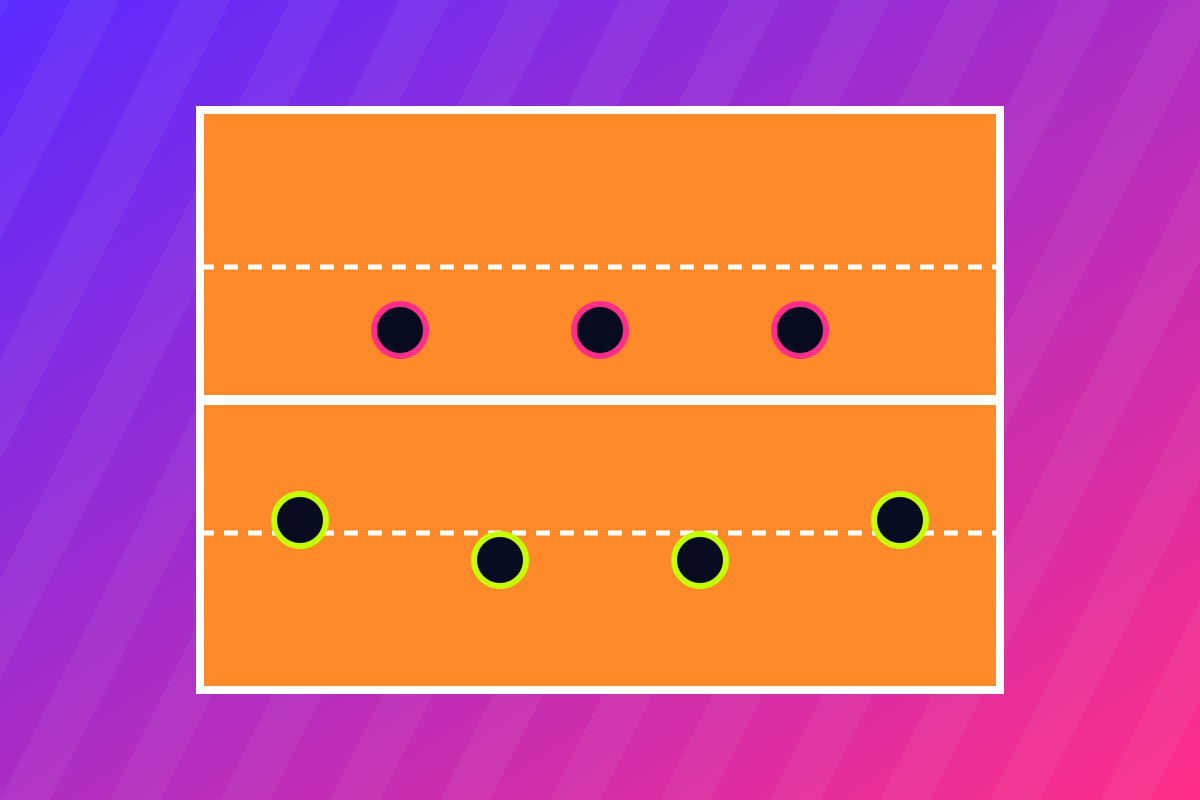
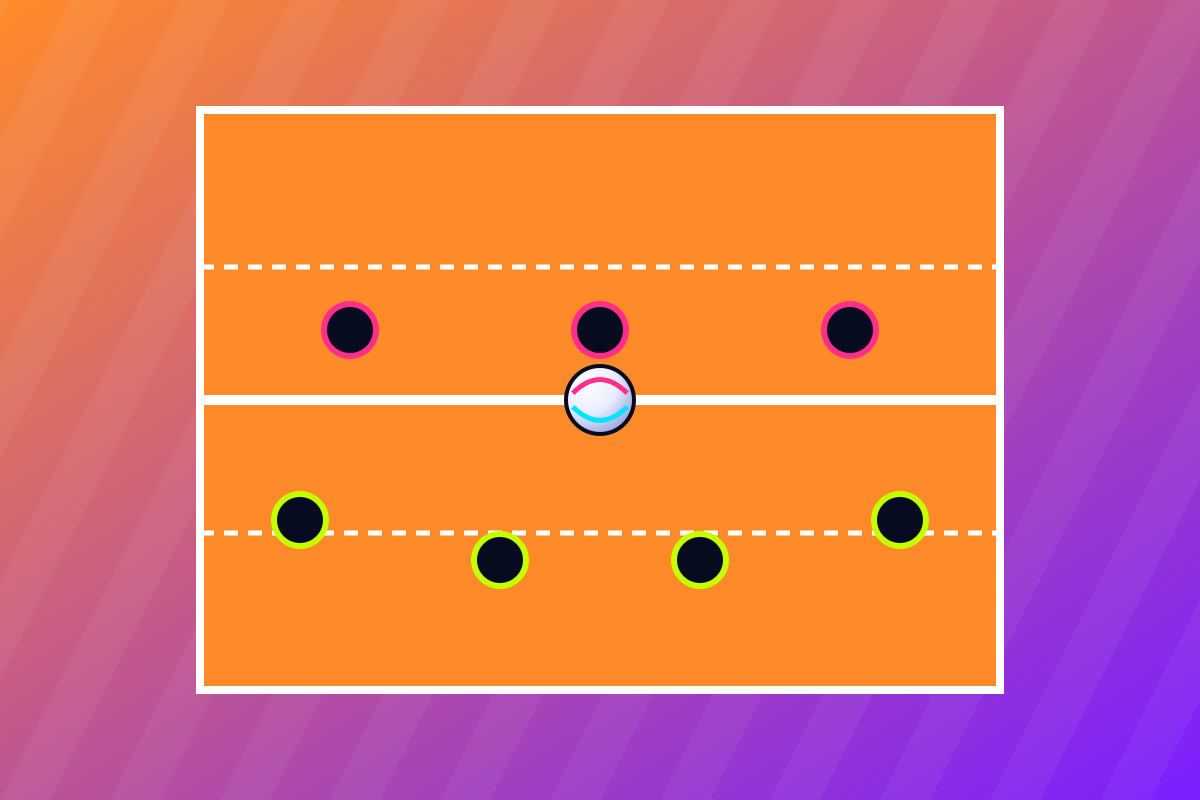
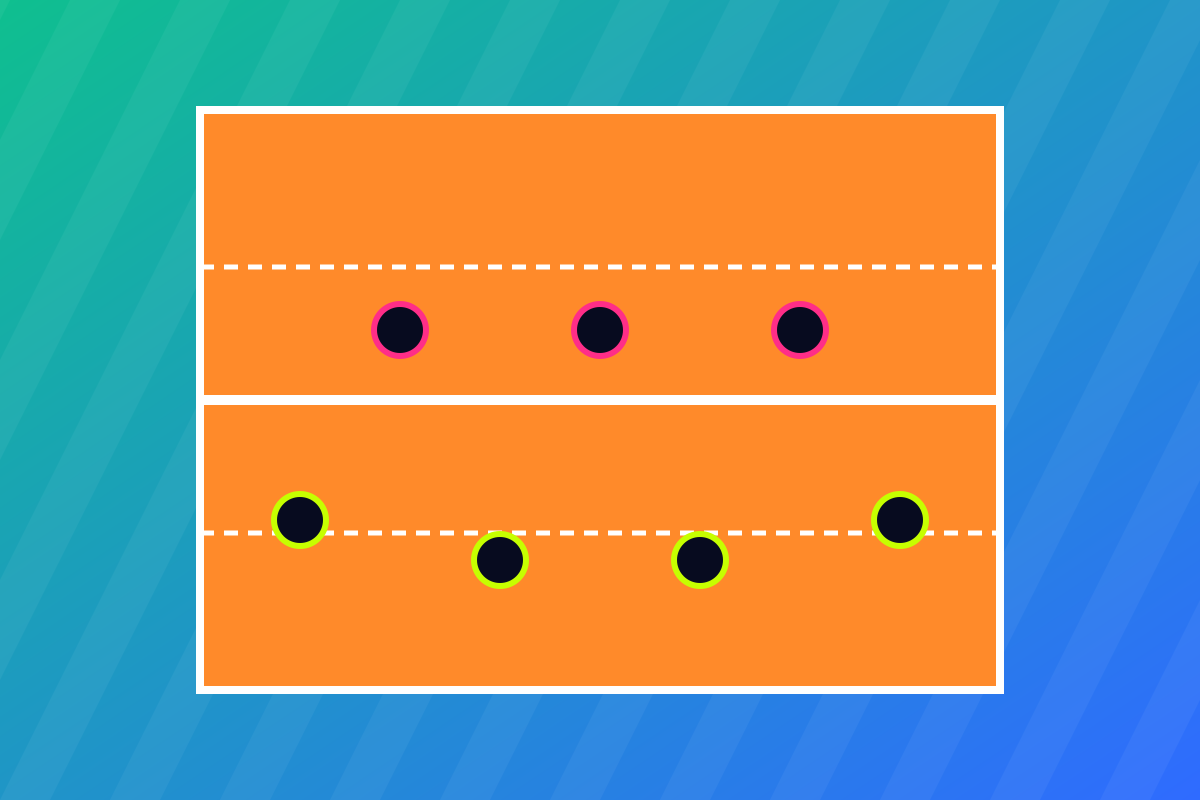
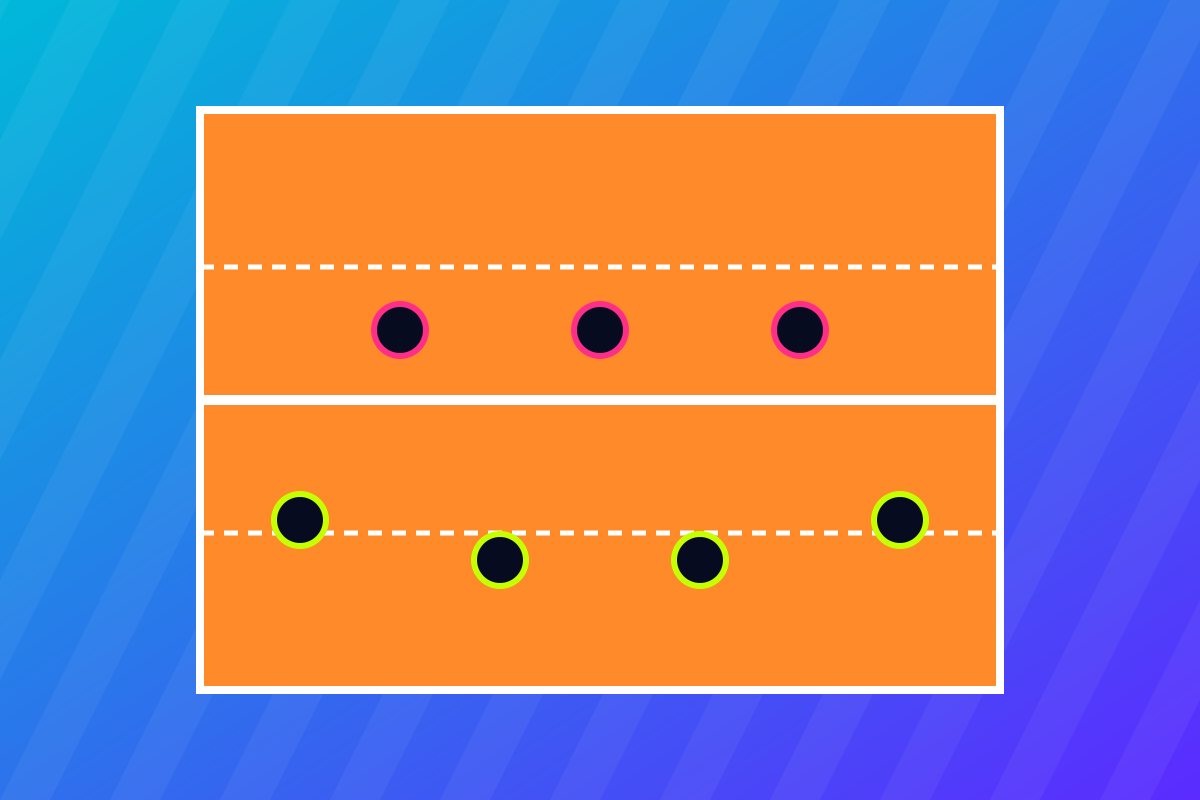
The numbers do not run left to right. Looking at the net from behind your own end line, the front row is 4 (left), 3 (middle) and 2 (right). The back row is 5 (left), 6 (middle) and 1 (right). Position 1 is the serving spot, and the rotation moves clockwise from there.
| Position | Where | What happens there |
|---|---|---|
| 4 | Front left | Left-side attack and block. Most teams run their biggest outside swings here. |
| 3 | Front middle | Quick middle attacks and the centre of the block. |
| 2 | Front right | Right-side attack and block. Setters usually set from near the net between 2 and 3. |
| 5 | Back left | Defence and serve receive on the left side. |
| 6 | Back middle | Deep-court defence and serve receive, covering the middle. |
| 1 | Back right | The serving position, and deep right-side defence. |
At the moment the ball is served, players must stand in rotational order (for example, the player in position 4 must be in front of the player in position 5). After the serve they can move anywhere, which is why a setter can run to the net straight away.
Volleyball roles and what they do
Roles describe a player’s job. Players keep their role as they rotate through the court positions above.
| Role | Main job | Key skills |
|---|---|---|
| Setter | Runs the offence; the second contact | Hand control, decision making |
| Outside hitter | Attacks from the left; passes serve receive | Power, passing, versatility |
| Opposite | Attacks from the right; blocks the other team’s best hitter | Hitting, blocking |
| Middle blocker | Blocks at the net; quick attacks | Footwork, timing, reach |
| Libero | Back-row defence and passing specialist | Digging, serve receive |
The libero position
The libero wears a contrasting jersey, plays only in the back row and may replace any back-row player without a normal substitution. They often cover position 5 or 6 for serve receive and defence, and leave the court when the rotation would move them to the front row. A libero cannot block or attack a ball above the net, and serving rules for the libero vary by league, so check yours.
Defensive specialists
Teams often add a defensive specialist (DS) for a back-row player who is weaker at defence. They are a regular substitute, unlike the libero.
How positions change in a rotation
Every time a team wins the serve back, players move one spot clockwise. Over six rotations each player visits the serving spot and the front row. See it happen in the volleyball rotation planner, then read the 5-1 volleyball rotation and 6-2 volleyball rotation guides. For scoring and faults, see the basic volleyball rules.
FAQ
What are the positions in volleyball?
There are six court positions numbered 1 to 6 (front row 4, 3, 2 and back row 5, 6, 1) and five main roles: setter, outside hitter, opposite hitter, middle blocker and libero. A defensive specialist is an extra back-row role.
Which position is the libero in volleyball?
The libero has no fixed number. They play in the back row, often in position 5 or 6, and leave the court when the rotation would send them to the front row.
What is position 1 in volleyball?
Position 1 is back right. It is the serving spot, and the server steps behind the end line to serve.
Do volleyball positions change?
Players rotate one spot clockwise whenever their team wins the serve back, but each player keeps the same role. After the serve, players can move to their usual spots.
How many players are on a volleyball court?
Six per team in indoor volleyball. Beach volleyball has two per team and no fixed positions.