Passing drills for volleyball do not need a net or a gym. Passing pairs is the simplest of them, and it builds the stable platform that every dig and serve receive depends on. It also fixes most beginner problems with minimal equipment and almost no setup.
How to run it
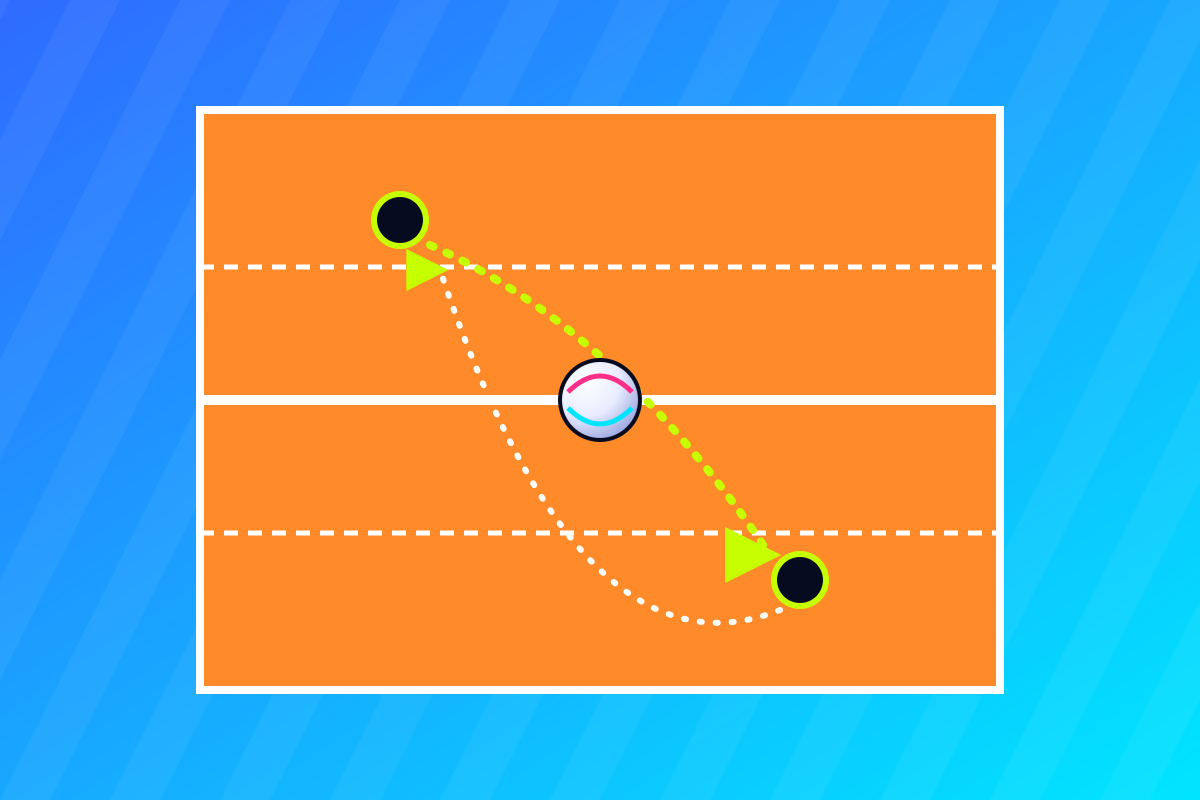
- Stand about 3 metres from a partner, feet shoulder width apart, knees bent.
- Join your hands: thumbs side by side, forearms flat and together.
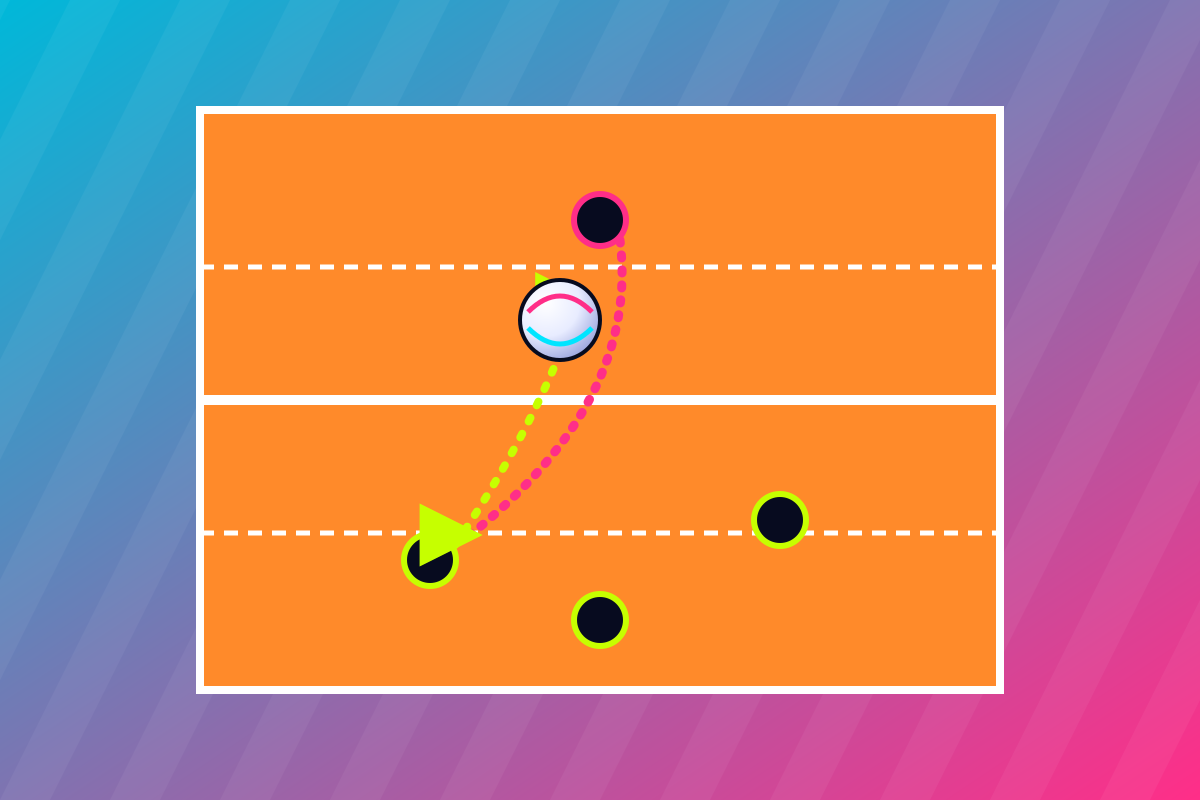
- Your partner tosses the ball underhand to your midline.
- Pass the ball back to their hands by moving your platform, not by swinging your arms.
- Do 20 reps, then swap roles.
Coaching points
- Move your feet first, then angle the platform.
- Contact the ball on the forearms, between wrist and elbow.
- Finish with your shoulders, not a big arm swing.
- Keep your eyes on the ball until contact.
Make it harder
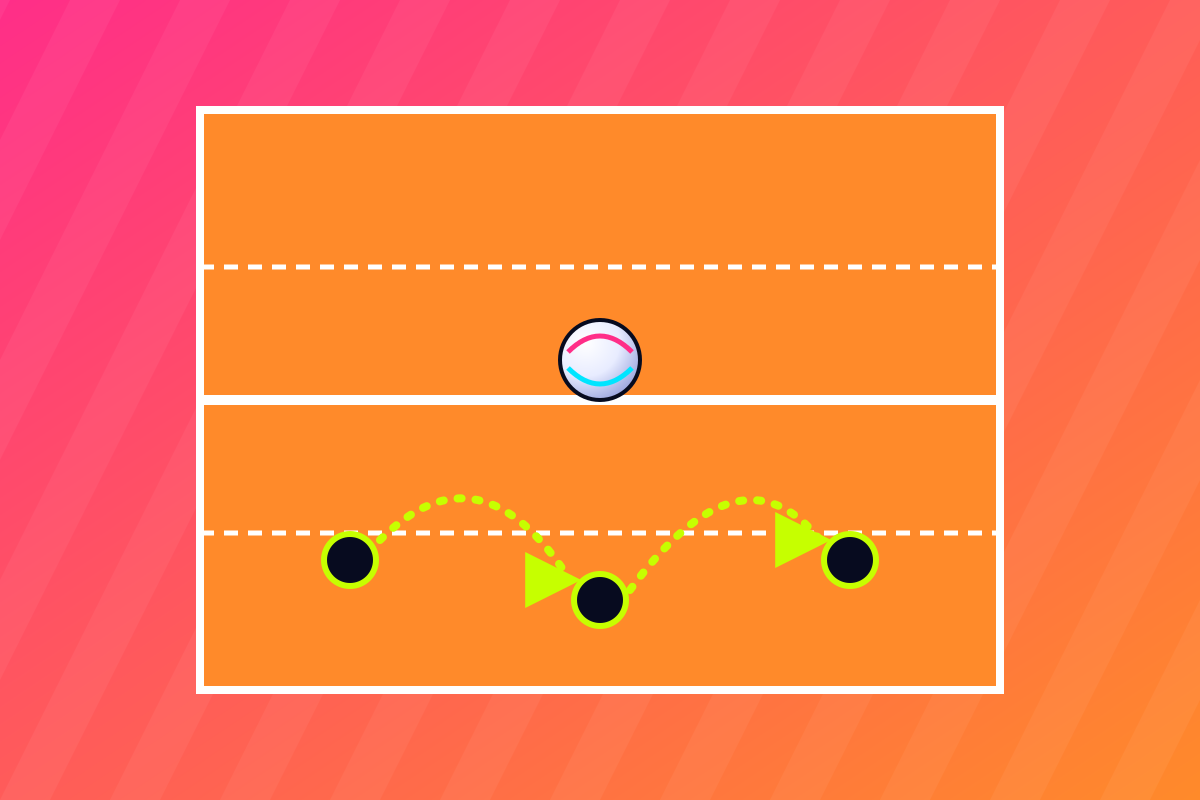
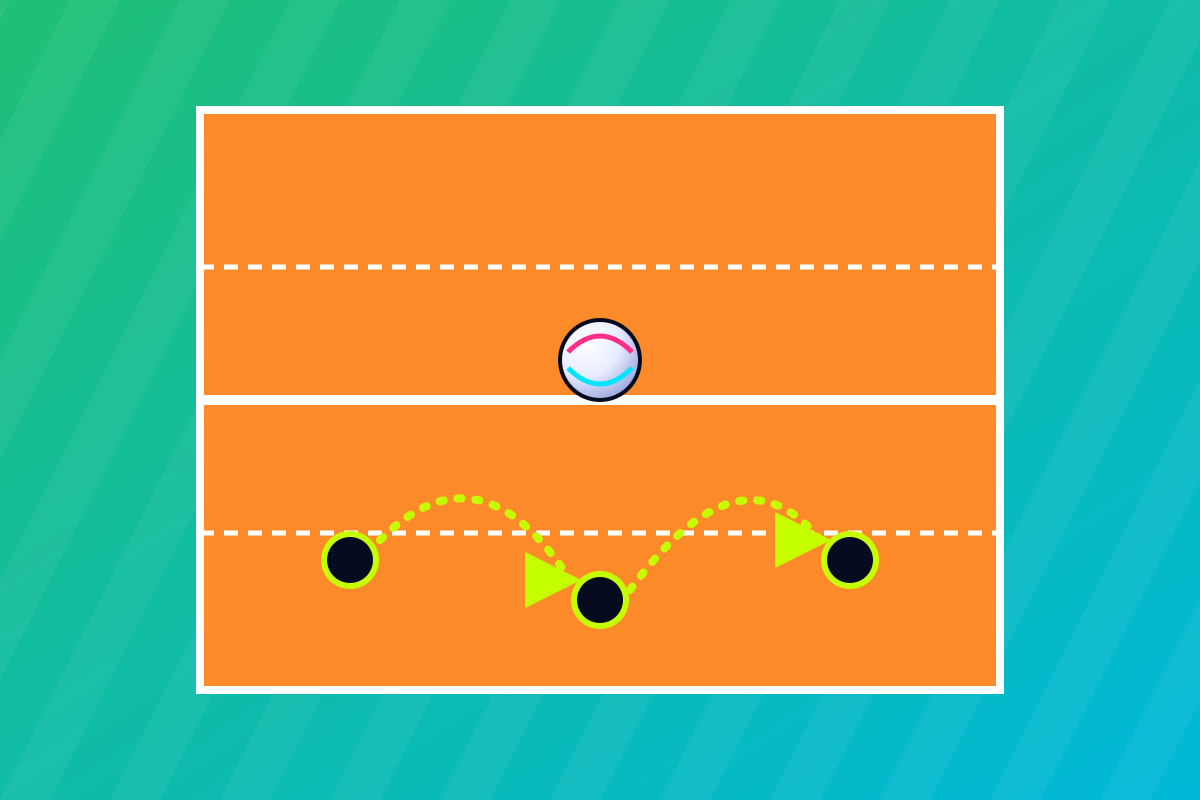
Increase the distance, add side-to-side movement or have the partner mix the toss height. Count consecutive good passes to add a goal.
More volleyball passing drills
Once passing pairs feels easy, move to the pepper drill for continuous ball control, or dig and cover for defence. For a full starter session, see our list of beginner volleyball drills.
FAQ
What is the best passing drill for beginners?
Passing pairs. Two players, one ball and a short distance let you focus on a stable platform before adding movement.
How long should passing drills for volleyball last?
Ten to fifteen minutes is enough for one drill. Quality reps matter more than a long session.
Can I practise volleyball passing alone?
Yes. Pass the ball upward to yourself, or pass against a wall and catch the rebound. A partner adds realistic tosses.