These beginner volleyball drills need a ball, a few cones or towels and, for some, a wall or a net. Each of the eight drills below lists the setup, the reps and one coaching point, so volleyball drills for beginners are easy to run alone, in pairs or with a small group.
Pick two or three drills per session rather than trying all eight at once. Spend most of your time on passing and serving, since those two skills touch almost every rally, and add one new drill each week as the basics get comfortable.
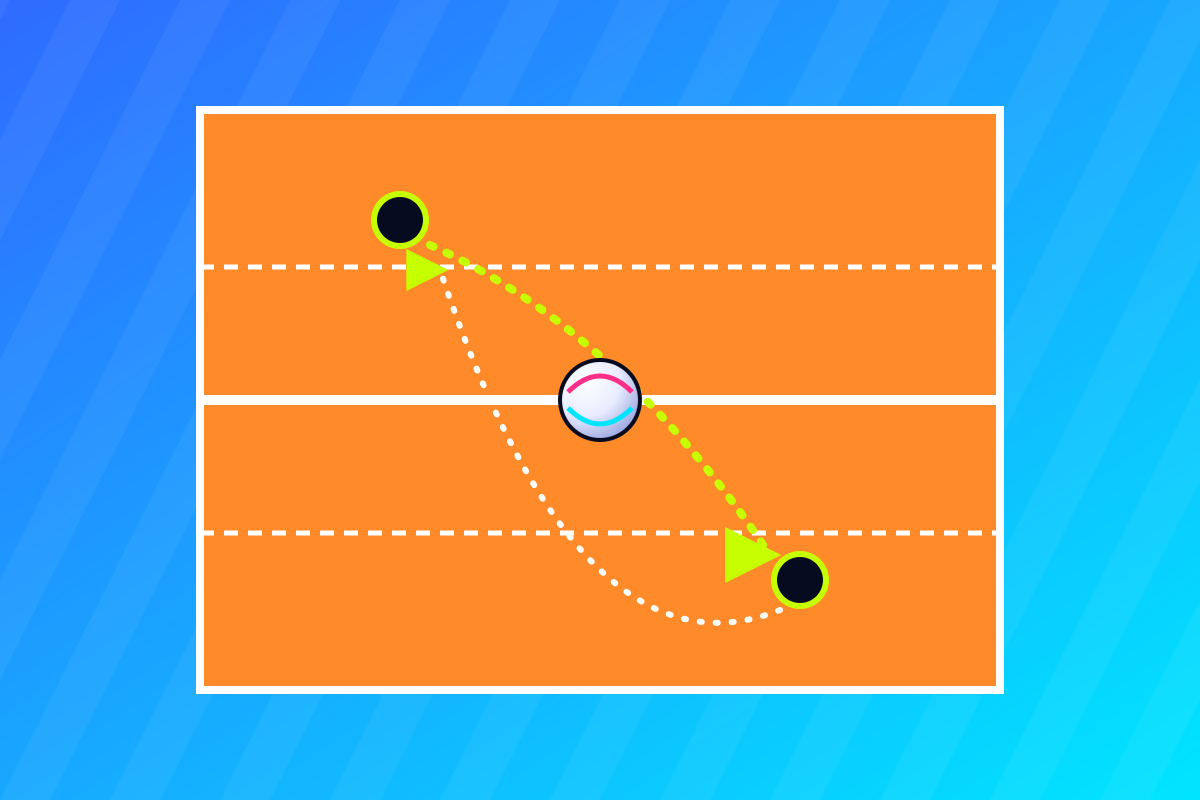
1. Platform passing pairs
- Setup: two players, about 3 metres apart, one ball.
- Reps: 20 passes, then swap roles. Do three rounds.
- Coaching point: move your feet first, then angle your platform to your partner. Full details in our passing pairs drill.
2. Wall setting
- Setup: stand about an arm and a half from a wall. Mark a spot on the wall about 30 cm above your head.
- Reps: 3 sets of 15 sets. Count only clean, consecutive ones.
- Coaching point: hands form a window above your forehead, and the ball touches your finger pads, not your palms. Push with your legs as well as your arms.
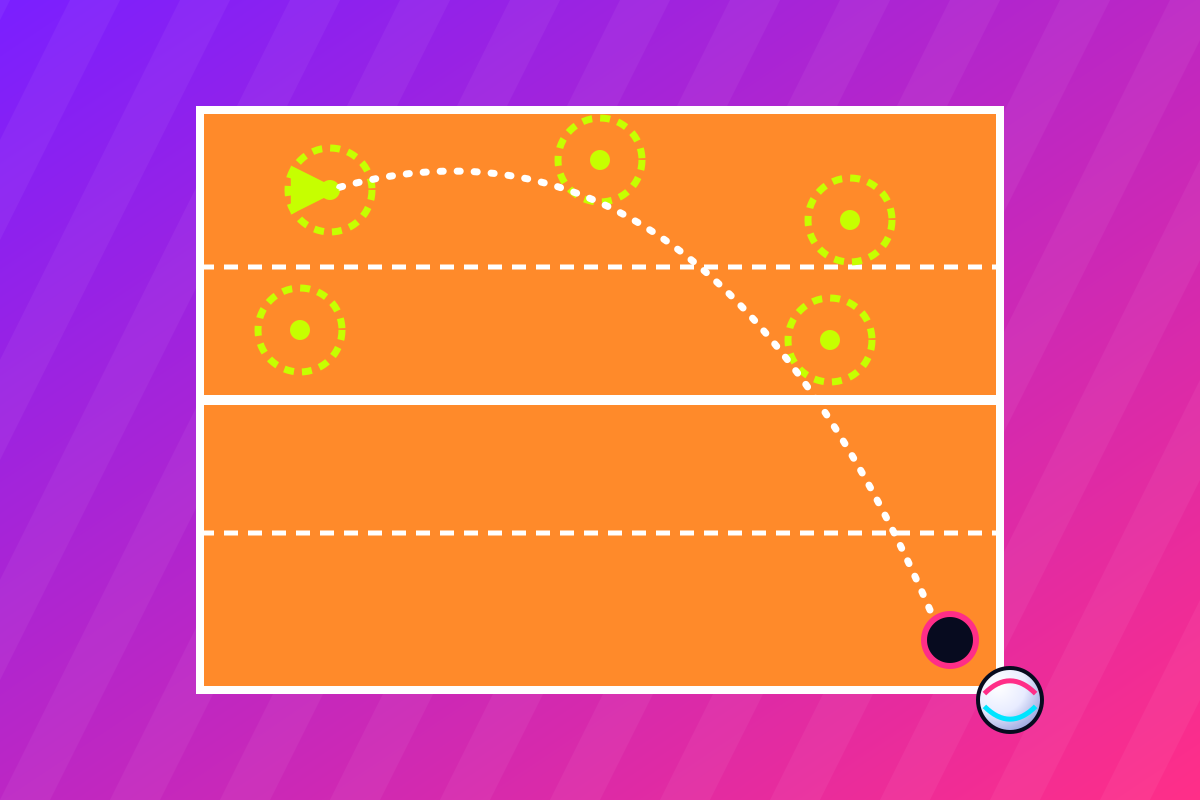
3. Serving to zones
- Setup: put five towels or cones on the far court (deep corners, short corners, middle). Beginners can start closer to the net and step back as accuracy improves.
- Reps: 10 serves per round, scoring a point for each target you hit.
- Coaching point: use the same toss every time. See the full serving targets drill.
4. Pepper
- Setup: two players, about 3 to 4 metres apart. Start with a pass, a catch and a gentle toss before trying a full pepper rally.
- Reps: 5 minutes, counting your best streak.
- Coaching point: keep the speed low until control is steady. Learn the full pattern in the pepper drill.
5. Approach footwork
- Setup: start 3 to 4 metres from the net, no ball. Later, a partner stands near the net and tosses the ball high just in front of the hitter.
- Reps: 10 approaches without a ball, then 10 tosses each.
- Coaching point: start slowly, build speed with each step, and finish with both feet planted before jumping. Swing with a relaxed arm, and contact the ball at the top of your reach.
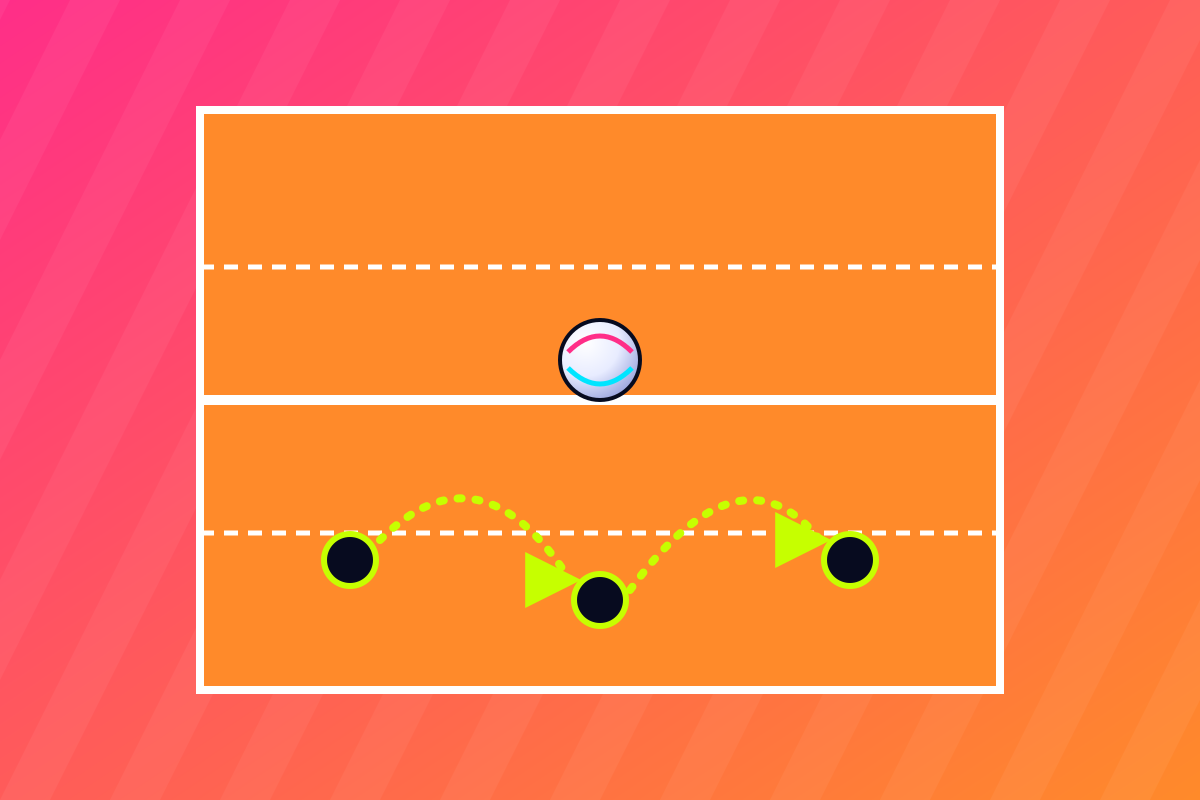
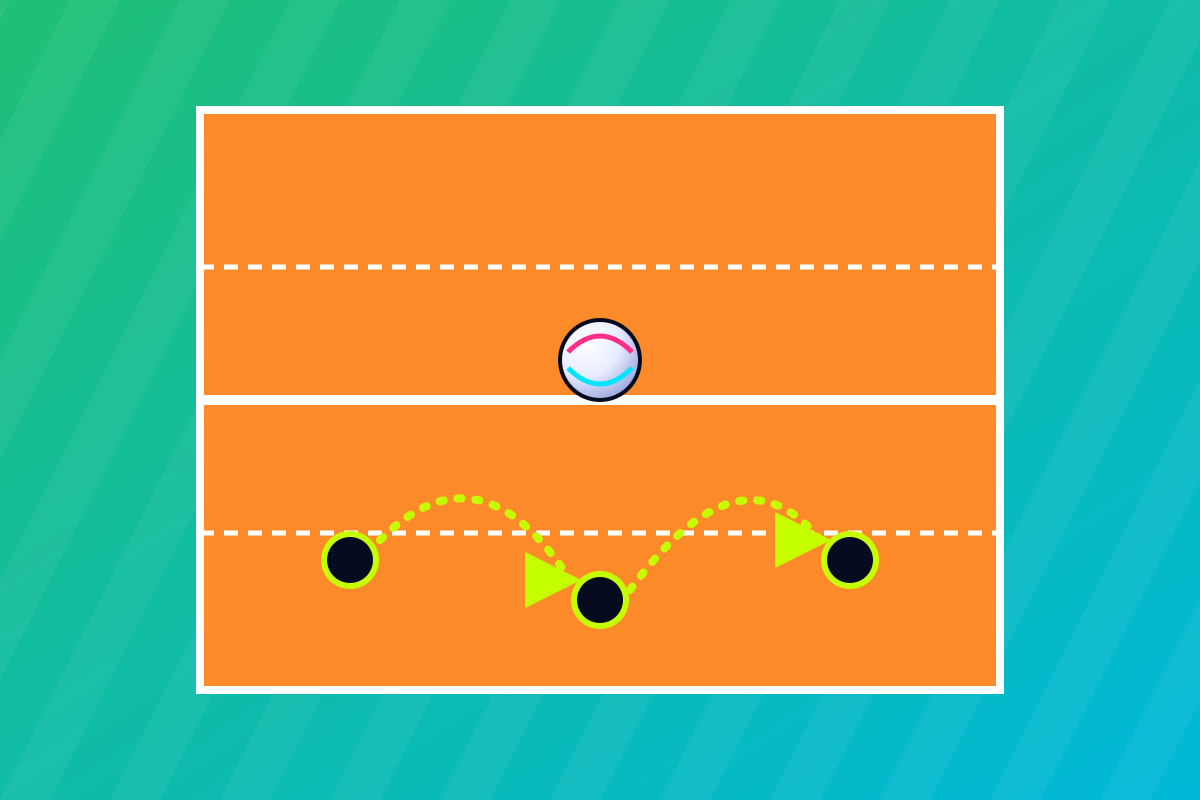
6. Shadow blocking
- Setup: stand facing the net with a partner or a line of cones to follow along the net. No ball.
- Reps: 3 sets of 8 jumps, sliding along the net between jumps.
- Coaching point: keep your hands up and in front, press them over the net without touching it, and land on both feet.
7. Butterfly drill
The butterfly drill is a passing, setting and movement drill. Players follow the ball around the court in a figure-eight pattern, so everyone gets reps at each skill. Versions vary between coaches, and this is a simple beginner version.
- Setup: three lines of players: one in the back left (passers), one at the net near the right-middle target (setters) and one at the front left (hitters or catchers). A coach or partner starts each ball with a toss.
- Reps: the passer passes to the setter, the setter sets to the front-left line, and each player runs to the end of the next line. Run 5 minutes, then swap which skill each line starts with.
- Coaching point: call every ball and move back into line quickly so the drill keeps flowing.
8. Serve receive triangle
- Setup: three receivers in a triangle (two back, one front) and a server on the other side. One target stands at the net.
- Reps: each receiver takes 10 serves, then rotates.
- Coaching point: call "mine" early and pass to the target with your platform, not your arms.
A 45-minute beginner session
- 8 minutes: jog, dynamic stretches and easy toss and catch.
- 10 minutes: platform passing pairs.
- 10 minutes: wall setting or serve receive triangle.
- 10 minutes: serving to zones.
- 7 minutes: pepper, then a cool-down stretch.
Once these feel comfortable, learn the basic volleyball rules and the volleyball positions so you can play a real game. For more, browse the full volleyball drills playbook.
FAQ
What are the best beginner volleyball drills?
Platform passing pairs, wall setting and serving to zones are the best starting points because they build the three most-used skills with very little setup.
Can I do volleyball drills for beginners alone?
Yes. Wall setting, serving to targets, approach footwork and shadow blocking all work without a partner.
How long should a beginner volleyball practice be?
Forty-five to sixty minutes is plenty. Short, regular sessions help you more than one long one.
What equipment do I need?
A volleyball, some cones or towels as targets and a wall. A net helps for blocking, serving and approach drills.