The 6-2 volleyball rotation uses two setters and six hitters. Whichever setter is in the back row sets the ball, and the setter in the front row plays as a hitter. The result is three front-row attackers in every rotation. This guide explains how the 6-2 works, how it compares with the 5-1 volleyball rotation, and where the 4-2 volleyball rotation fits in.
How the 6-2 rotation works
A 6-2 lineup has two setters, two outside hitters and two middle blockers. The setters stand opposite each other, for example in positions 1 and 4. The team rotates clockwise like any other system, so after three rotations the two setters have swapped rows: the one who started in the back row is now at the net, and the other has moved to the back.
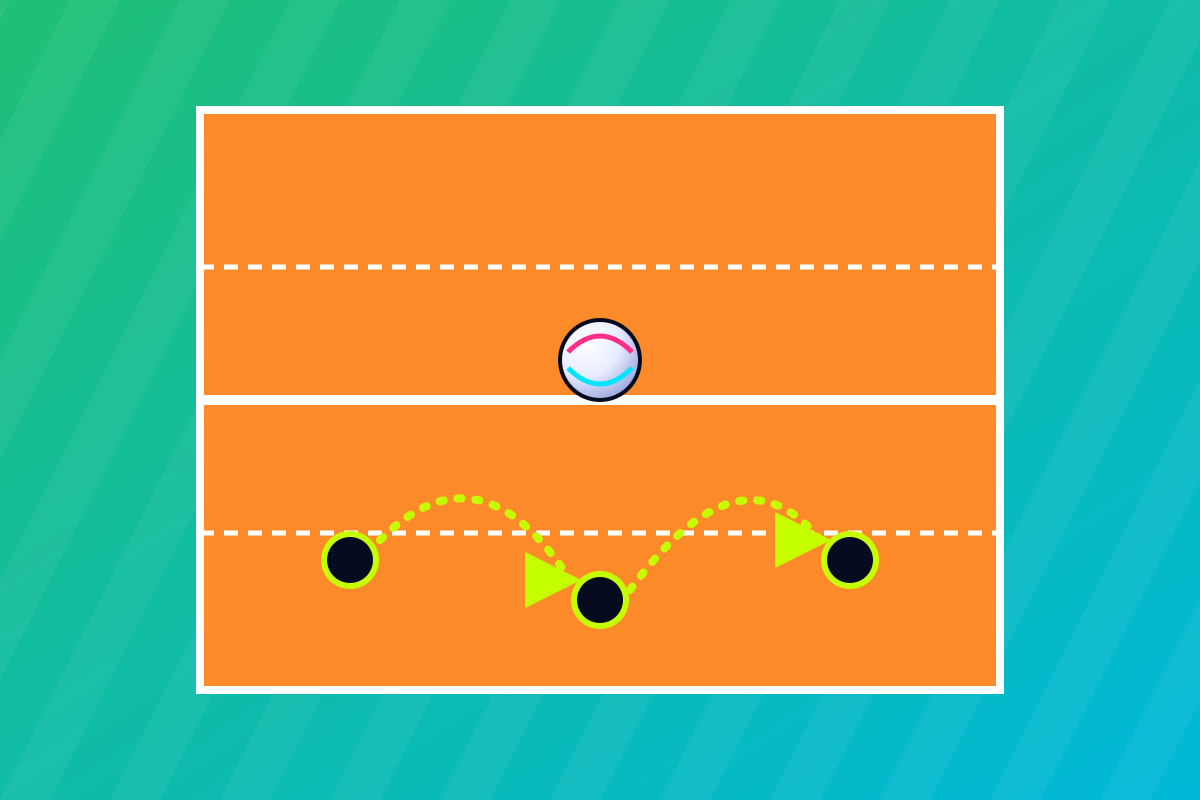
In each rotation, the setter in the back row is the one who sets. After the serve, that setter moves up to the net, in front of the front-row players, to take the second contact. The setter in the front row blocks and attacks like any other front-row hitter.
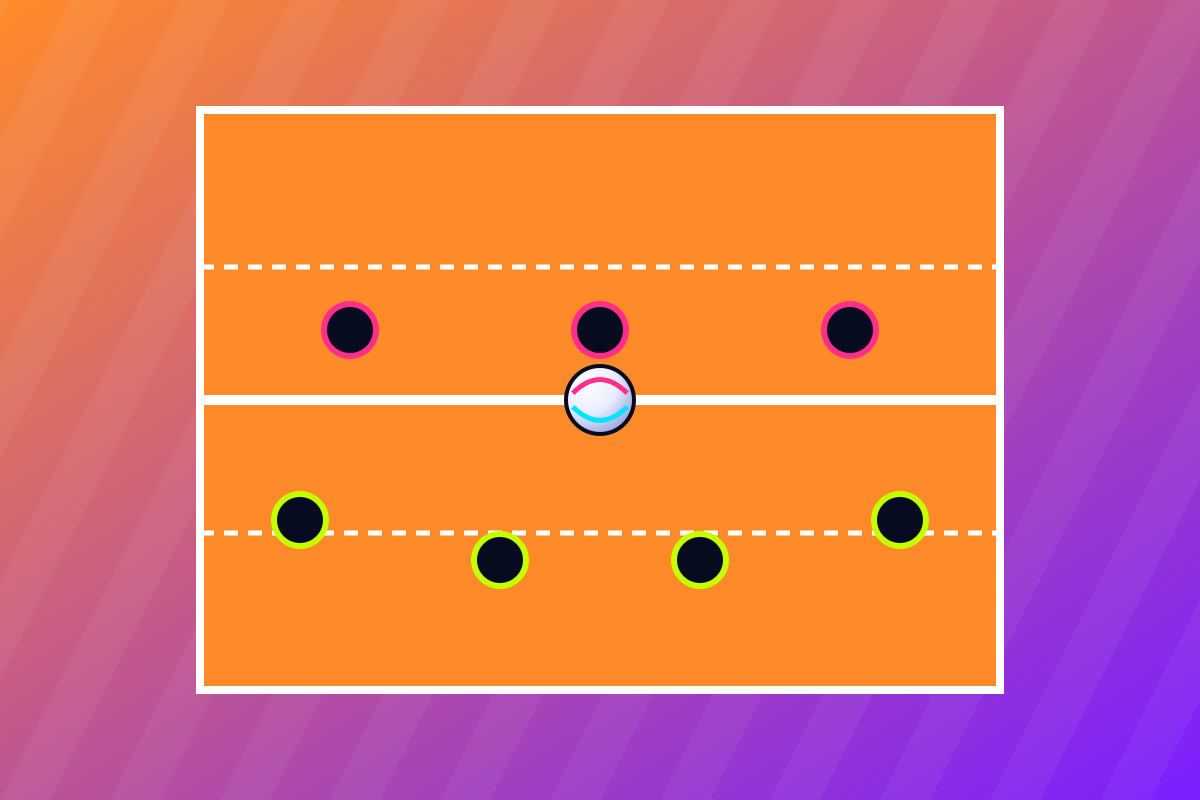
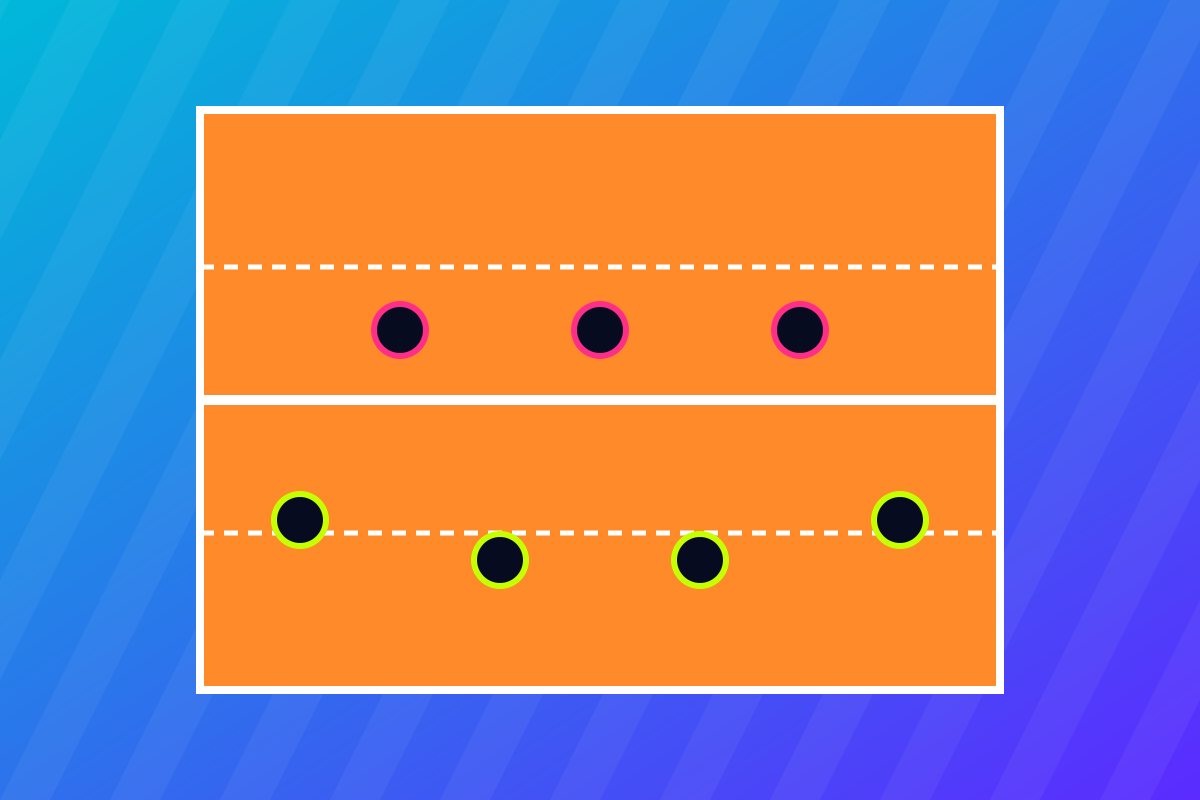
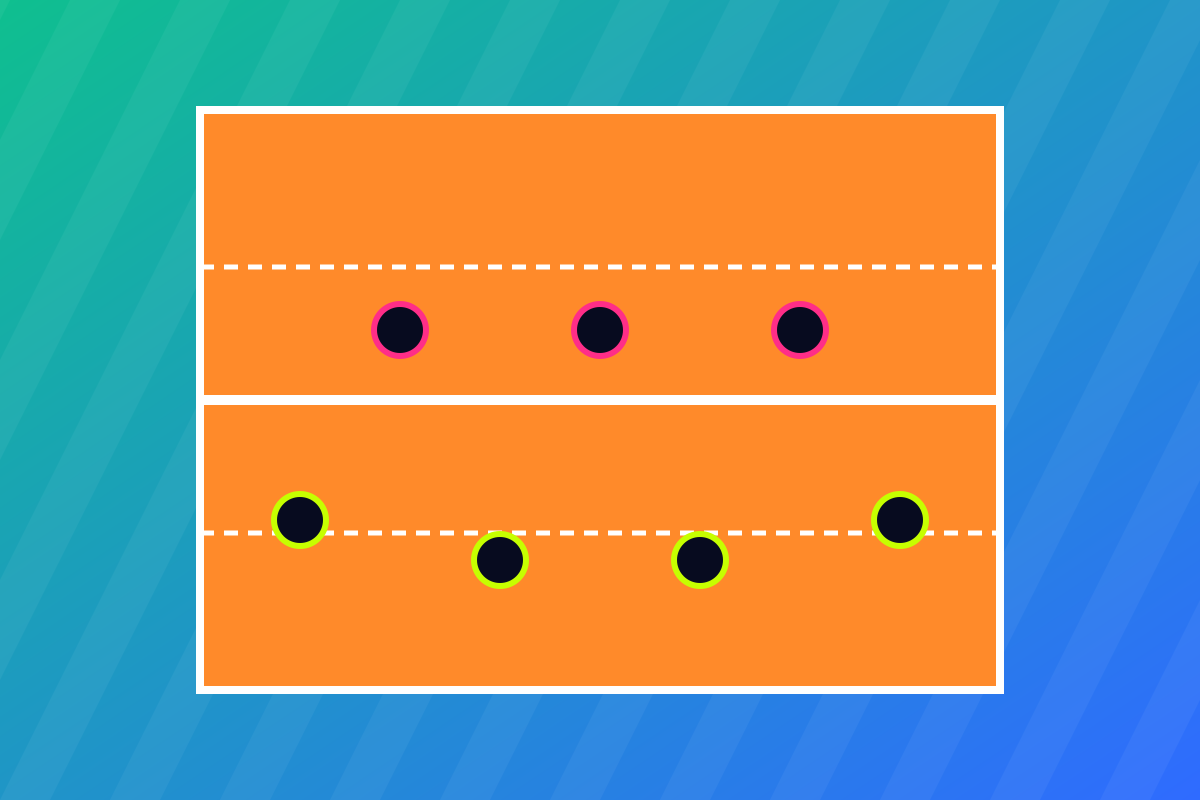
The six rotations (diagram)
Pink marks the setter who is setting. The cyan S is the front-row setter, who plays as a hitter in that rotation. OH is outside hitter and MB is middle blocker.
| Rotation | Setters in positions | Setter who sets | Front row (4, 3, 2) | Front-row attackers |
|---|---|---|---|---|
| Rotation 1 | 1 and 4 | Position 1 (back row) | S, MB, OH | 3 |
| Rotation 2 | 3 and 6 | Position 6 (back row) | OH, S, MB | 3 |
| Rotation 3 | 2 and 5 | Position 5 (back row) | MB, OH, S | 3 |
| Rotation 4 | 1 and 4 | Position 1 (back row) | S, MB, OH | 3 |
| Rotation 5 | 3 and 6 | Position 6 (back row) | OH, S, MB | 3 |
| Rotation 6 | 2 and 5 | Position 5 (back row) | MB, OH, S | 3 |
Pros and cons of the 6-2
- Pro: three front-row attackers in every rotation, which gives the offence more options.
- Pro: the setter always sets from the back row, so there is never a front-row setter to block or defend as one.
- Con: both setters must be able to attack and block, since each spends half the rotations in the front row.
- Con: two setters can have different timing, so hitters must adjust to both.
- Con: there is usually no dedicated opposite hitter, so the right-side attack may be weaker.
The 4-2 volleyball rotation
The 4-2 volleyball rotation is the classic beginner and youth system. It has four hitters and two setters. The setters stand opposite each other, so one setter is always in the front row, and the front-row setter does the setting from near the net, around position 2 or 3. That leaves two hitters up front each rotation, plus the setter. It is simple to learn because the setter’s job never changes, but with only two attackers the offence has fewer options.
6-2 vs 5-1 vs 4-2
| System | Setters | Who sets | Front-row attackers | Best for |
|---|---|---|---|---|
| 4-2 | Two, opposite each other | The front-row setter | 2 hitters plus the setter | Beginners and youth teams |
| 5-1 | One | The same setter, all six rotations | 3 (setter in back row) or 2 (setter in front row) | Teams with one strong setter |
| 6-2 | Two, opposite each other | The back-row setter | 3 in every rotation, including the front-row setter | Teams with two setters who can also hit |
See it in the planner
Movement is the same in every system, so you can learn the clockwise order in the volleyball rotation planner. Our planner uses a 5-1 style lineup. To understand each role in the lineup, read volleyball positions explained. Looking for something to practise? Try these beginner volleyball drills.
FAQ
What is the 6-2 rotation in volleyball?
It is a system with two setters and six hitters. The back-row setter sets, and the front-row setter plays as a hitter, so there are always three front-row attackers.
Is the 6-2 better than the 5-1?
Neither is better in every case. A 6-2 gives three attackers every rotation but needs two setters who can hit. A 5-1 keeps one setter and one tempo but has only two front-row attackers when the setter is at the net.
What is the 4-2 volleyball rotation?
A system with two setters who play opposite each other and set from the front row. Each rotation has the setter plus two hitters up front.
Why is the 4-2 used for beginners?
The setter’s job is simple and always in the same area, so new players learn the pattern quickly before moving to a 5-1 or 6-2.